
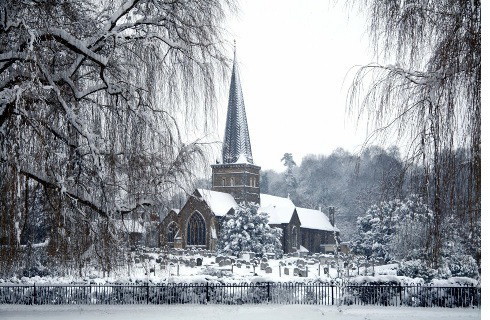
Godalming
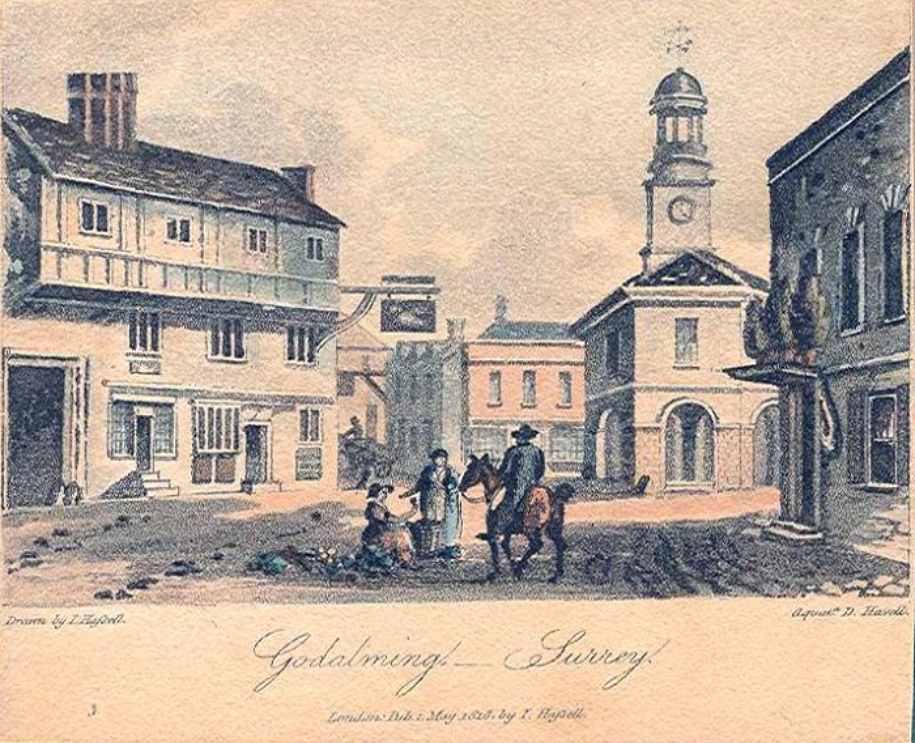
The earliest Chittys in this family lived in Surrey around and indeed in Godalming which is a market town and parish in southwest Surrey, England, around 50 km southwest of central London. It is at the confluence of the Wey and Ock.. The civil parish covers 3.74 sq mi (9.7 km2) and includes the settlements of Farncombe, Binscombe and Holloway Hill.
Throughout its history, Godalming has benefitted from its location on the main route from London to Portsmouth Dockyard. Local transport links were improved from the early 18th century with the opening of the turnpike through the town in 1749 and the construction of the Godalming Navigation in 1764. Expansion of the settlement began in the mid-19th century, stimulated by the opening of the first railway station in 1847 and the relocation of Charterhouse School from London in 1872. The town has a claim to be the first place in the world to have a combined public and private electricity supply.
By the time of the first census in 1801 Godalming had a population of just over 3,400. To us, it would seem no more than a village but by the standards of the time, it was a respectably sized market town. Godalming was considerably larger than Guildford at that time. Godalming grew rapidly in the 19th century. By 1851 the population had grown to over 6,500.
The old town hall was built in 1814. Market stalls used to stand underneath it. Then in 1825, an Improvement Act formed a body of men called Improvement Commissioners with powers to pave and light the streets of Godalming
/https://en.wikipedia.org/wiki/Godalming
The Imperial Gazetteer of England & Wales 1870
GODALMING, a town, a parish, a sub-district, and a hundred in Surrey. The town stands on the river Wey, and on the Guildford and New Portsmouth railway, 4 miles SSW of Guildford. Its site is a fine valley, or tract of meadow, of the kind the Saxons called Ing; nearly surrounded by steep high ground.
Its name is supposed to have been derived from an ancient Saxon proprietor, named Godhelm, and to have been originally Godhelm’s Ing. Its arrangement is both contracted and straggling; includes one principal street, and several smaller ones; and may be said to include also, as suburbs, the villages of Farncombe and Crownpits.
The town is ancient; and was, in the 17th century, an occasional resort of king and courtiers for hunting. A decayed timber house, very recently standing in Bridge-street, is said to have been a hunting-lodge of Charles II.; and some interesting brick houses, in High-street, bear the date of 1663.
The town has a head post office, a r. station with telegraph, two banking offices, two chief inns, a public hall, a church, three dissenting chapels, national schools, alms-houses with £148, and other charities with £150. The public-hall was built in 1861, after designs by Peak.
The church is variously early English, decorated, and perpendicular, chiefly the last; has an early English central tower; was restored and enlarged in 1840; and contains monuments of the Eliots of Busbridge, the Wyatts of Shackleford, the Rev. A. Warton, vicar of Godalming and grandfather of the historian of English poetry, and the Rev. O. Manning, also vicar of Godalming and historian of Surrey. Markets are held on Wednesdays; and fairs, on Feb. 13, and July 10.
The Wey is navigable, by means of cuts made in 1768, to Guildford; and gives communication thence to London.
A manufacture of cloth formerly flourished; and paper-making, tanning, and the manufacture of fleecy hosiery are now largely carried on.
The town was chartered by Elizabeth; is governed, under the new act, by a mayor, four aldermen and twelve councillors; and is a seat of county courts, and a polling place. Real property, £9,314; of which £40 are in quarries, and £129 in gas-works. Pop., 2,321. Houses, 491.
The manor is mentioned as Godelming in Alfred’s will; was given by that king to his nephew; was given by Henry II. to the bishops of Salisbury; and passed to the Pastons and the Mores. Some remains of the old manor-house. with its chapel, are near Catteshall.
Westbrook, adjoining the town on the W, was long the property of the Oglethorpes, and is traditionally said to have once given concealment to Charles Edward Stuart. Busbridge Hall, 1½ mile from the town, is the seat of J. Ramsden, Esq.; contains some good pictures; and stands amid fine park scenery. The picturesque features of the town and its neighbourhood figured much in the paintings of Inskipp and Creswick.
A famous deception, which caused much sensation at the time, was practised at Godalming, in 1726, by Mrs. Mary Tofts, who pretended to have brought into the world some hundreds of rabbits; and is celebrated by Hogarth in his “Cunicularii.”
Source: The Imperial Gazetteer of England & Wales [Wilson, John M]. A. Fullarton & Co. N. d. c. [1870-72].
https://www.parishmouse.co.uk/surrey/godalming-surrey-family-history-guide/
Expansion to Deal
Deal is a coastal town in Kent, England, which lies where the North Sea and the English Channel meet, 8 miles (13 km) north-east of Dover and 8 miles (13 km) south of Ramsgate. It is a former fishing, mining and garrison town whose history is closely linked to the anchorage in the Downs. Close to Deal is Walmer, a possible location for Julius Caesar‘s first arrival in Britain.
Deal became a ‘limb port’ of the Cinque Ports in 1278 and grew into the busiest port in England.
Read more: Places of originAnd to London
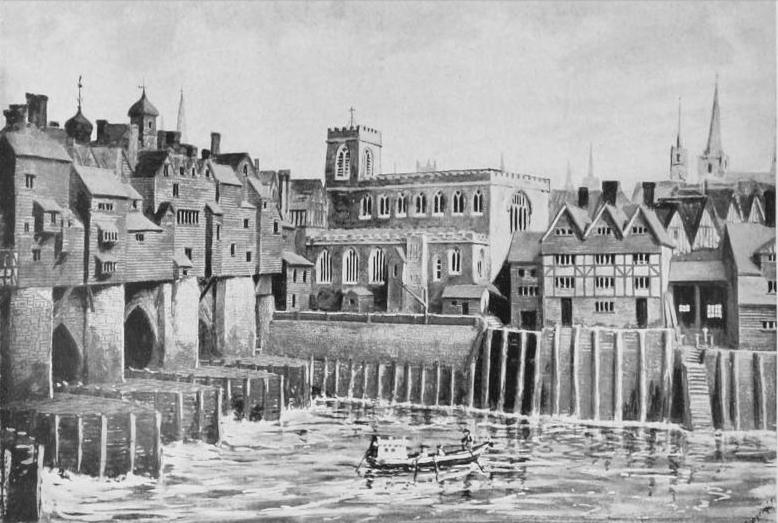
London probably does not need any backgroud information. The Chittys moved into the area in the 18th cnetury. London then was actually divided into 3 entities – the City (London), the court (Westminster and St James’s) and south of the river (Southwark). The essayist Joseph Addison, in 1712, looked on it as “an aggregate of various nations distinguished from each other by their respective customs, manners an interests”. In 1700, its population numbered about half a million, swelling to approximately 750,000 by 1750 and roughly a million by 1800. By contrast, England’s second city, Bristol, had scarcely 30,000 inhabitants.
https://www.theguardian.com/books/2012/mar/25/london-eighteenth-century-jerry-white-review